
Laser Tattoo Removal in
Camp Hill, PA
Services

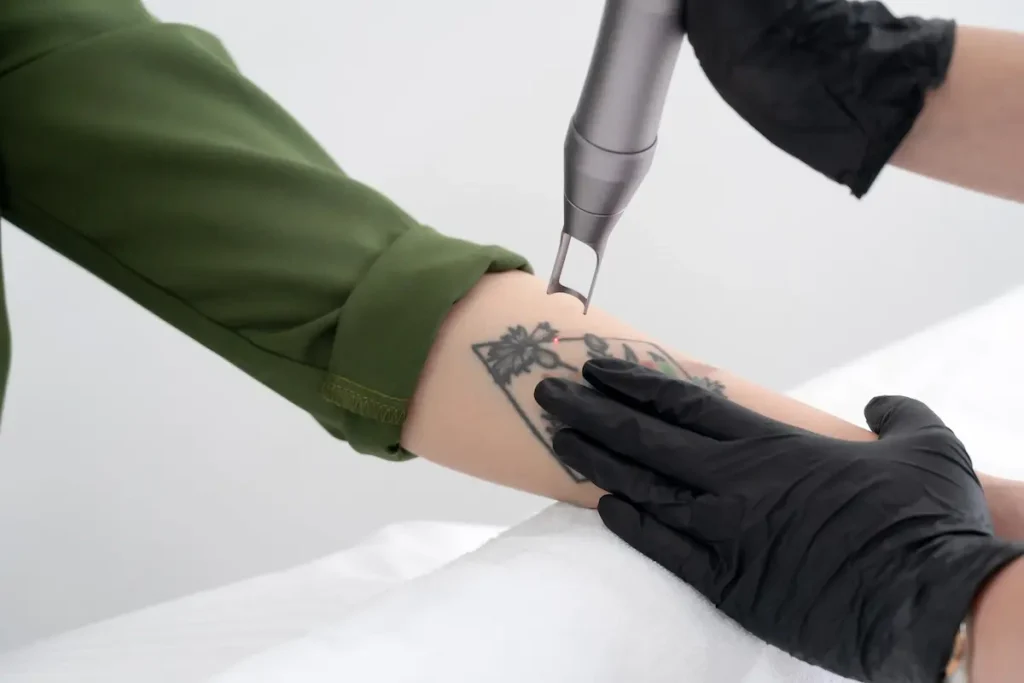
Laser tattoo removal at Restorativ Health & Beauty offers a way out of a tattoo you no longer want. Using targeted laser energy to break ink into fragments your body can clear, it fades tattoos progressively over a course of sessions, whether you want the tattoo gone entirely or lightened for a cover-up.
We will be straight with you throughout, starting here. Removal is a slower and more demanding process than most people expect, and the results depend heavily on factors nobody can change, particularly the colors of your ink.
How Laser Tattoo Removal Works
Tattoo ink sits in particles too large for your body to remove, which is why tattoos are permanent. The laser addresses that directly by delivering extremely short, high-energy pulses that shatter those particles into much smaller fragments.
Once fragmented, the ink becomes something your immune system can deal with. Your body clears those particles gradually through its lymphatic system over the weeks following each session, which is why fading is progressive and why sessions must be spaced well apart. The laser does the breaking, your body does the removing, and that part takes time.
This is also why the interval matters. Treating again before your body has cleared the previous round achieves little and increases the risk of irritation, so we typically space sessions six to eight weeks apart.
What Affects How Many Sessions You Need
Every tattoo behaves differently. The main factors are:
• Ink color. The single biggest variable. Black and dark blue clear most reliably. Red responds reasonably well. Green, turquoise, light blue, yellow, and white are considerably more stubborn.
• Ink density and layering. Heavily saturated work, or a tattoo covering an older one, means more ink to break down.
• Age of the tattoo. Older tattoos have usually faded somewhat and tend to clear more easily than fresh ones.
• How it was applied. Amateur tattoos often use less ink at a shallower depth and can clear faster than professional work.
• Location on your body. Areas with stronger circulation clear faster. Ankles, feet, and hands are typically slower.
• Your skin type. This affects which settings and wavelengths are safe, which affects pacing.
• Previous removal attempts. Tattoos treated elsewhere without success can be more difficult.
Most tattoos need six to twelve sessions, and some need more. At six to eight weeks between sessions, the process often runs a year or longer. We will give you a realistic estimate at your consultation rather than a hopeful one.
Show More Content
Frosting and Healing
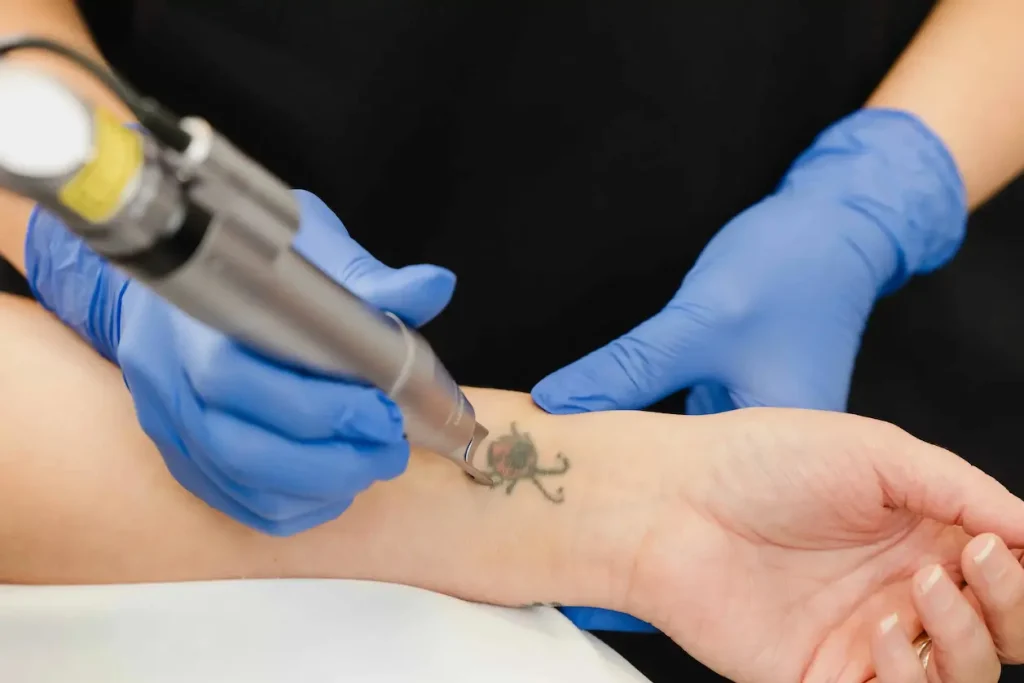
Immediately after treatment, the tattoo will usually turn white or grayish. This is called frosting, and it is completely normal. It happens as gas is released from the shattered ink particles and typically fades within twenty to thirty minutes. It is a sign the laser has done its job.
After that, expect redness, swelling, and tenderness across the treated area, similar to a sunburn. Some pinpoint bleeding, blistering, or scabbing can occur, and while it looks alarming, it is part of normal healing.
Aftercare matters enormously here. Keep the area clean and covered as instructed, apply the ointment we recommend, and do not pick at scabs or blisters, since that is the main cause of scarring after removal. Avoid swimming pools, hot tubs, saunas, and heavy sweating until healed, and keep the area out of the sun. Most sessions heal within one to two weeks.
What to Expect
Each session is relatively brief, though preparation takes a little time:
Consultation and assessment
We examine the tattoo, note its colors, age, density, and location, review your medical history and skin type, then give you an honest estimate of sessions and likely outcome.
Patch testing
We typically test a small area to confirm how your skin and ink respond.
Numbing and preparation
Topical numbing is applied, cooling is used, and you will wear protective eyewear.
Treatment
The laser is passed over the tattoo. Small tattoos take only minutes, larger pieces longer.
Immediate aftercare
We cool and dress the area, then go through your healing instructions.
On the sensation, we should be honest. Most people find tattoo removal more uncomfortable than getting the tattoo was, commonly describing it as a hot snapping sensation. Numbing and cooling make it manageable, and sessions are short, but we would rather you know in advance.
Show More
Realistic Expectations
Two things worth understanding before you commit.
First, complete removal is achievable for many tattoos but not all. Depending on your ink colors and how your body responds, you may be left with a faint shadow rather than clear skin. Certain inks, particularly white and some cosmetic pigments, can also darken paradoxically when treated.
Second, if your goal is a cover-up rather than complete removal, you may need far fewer sessions. Fading a tattoo enough for an artist to work over it is a much lower bar than clearing it entirely, so tell us if that is your plan.
Why Restorativ Health & Beauty
Tattoo removal carries real risk of scarring, burns, and pigmentation changes when performed with inappropriate settings or on unsuitable skin. Restorativ Health & Beauty was founded by a registered nurse and is guided by licensed medical providers, so your treatment is assessed and performed in a medically directed setting.
We assess your skin type carefully, since deeper skin tones require appropriate wavelengths and carry a higher risk of pigmentation changes if treated incorrectly. We are honest about session counts and likely outcomes, and if fading for a cover-up is your goal, we will plan for that.
Show FAQ's
Frequently Asked Questions
Usually six to twelve, though some tattoos need more. Because sessions are spaced six to eight weeks apart, the full process often takes a year or longer.
For most people, yes. It is usually described as a hot snapping sensation. Numbing and cooling make it manageable, and sessions are short.
Because your body does the actual removal. The laser fragments the ink, then your lymphatic system clears it over the following weeks. Treating again too soon achieves little.
Often substantially, but not always completely. Black and dark blue clear best, while green, turquoise, yellow, and white can be stubborn and may leave a faint trace.
That is frosting, and it is expected. It happens as gas releases from the shattered ink and usually fades within twenty to thirty minutes.
Yes, with appropriate wavelengths and settings. Deeper skin tones carry a higher risk of pigmentation changes if treated incorrectly, so proper assessment is essential.
Tell us at your consultation. Fading for a cover-up needs considerably fewer sessions than complete removal, so we can plan a shorter course.
Begin Your Wellness Journey
Relax, Restore & Reconnect at Restorativ Health & Beauty