
Paramedical Tattooing in
Camp Hill, PA
Services
Paramedical tattooing at Restorativ Health & Beauty uses the precision of cosmetic tattooing for a different purpose: restoring what surgery, illness, or injury has changed. Through carefully matched pigment and skilled technique, we can recreate the appearance of an areola after mastectomy, blend the color of scars into surrounding skin, and address other areas where pigment has been lost.
This is among the most meaningful work we do. For most clients it is not about looking better in any conventional sense. It is about recognizing yourself in the mirror again.
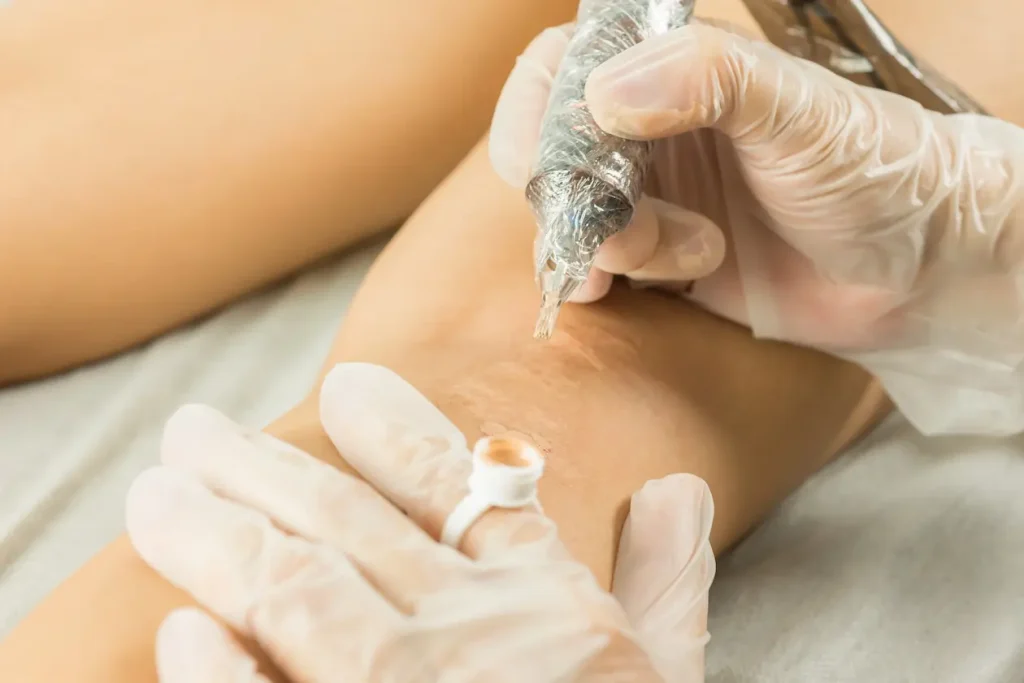
Areola Restoration
For many people who have been through mastectomy and reconstruction, this is the final step. Reconstruction can rebuild shape, but the areola and nipple are frequently not restored surgically, which leaves a visible reminder every day.
Areola restoration uses pigment, shading, and highlighting to recreate the appearance of an areola and nipple with realistic depth and dimension. Color is matched carefully to your skin, and where only one side has been affected, matched to your remaining side. The work is typically done across two or three sessions, allowing us to assess how the pigment has healed before refining color and detail.
Some insurance plans cover areola restoration as part of breast reconstruction, since federal protections require plans covering mastectomy to also cover reconstruction. Coverage varies by plan and provider, so it is worth asking your insurer and care team directly.
What Paramedical Tattooing Can Address
We work with clients on:
• Areola and nipple restoration following mastectomy or breast surgery
• Surgical scars from any procedure
• Scars from injury, burns, or accidents
• Skin graft and donor site scarring
• Areas of pigment loss, including from vitiligo
• Cleft lip scarring
• Stretch mark camouflage
• The appearance of thinning hair or scarring on the scalp
Every case is different, and part of the consultation is an honest conversation about what pigment can and cannot achieve for your particular situation.
Show More Content
Scar Camouflage
Scar camouflage works by depositing pigment matched to your surrounding skin, reducing the contrast that makes a scar noticeable. Done well, the scar becomes considerably harder to see without close inspection.
We want to be straightforward about what this means. Camouflage blends rather than erases. It changes the color of a scar to sit closer to your skin, but it does not remove the scar or change its texture. If a scar is raised, indented, or has significant textural difference, pigment alone will not resolve that.
Candidacy also depends on the scar itself. Good candidates are mature scars, generally at least a year old, that have settled to pale or white and lie relatively flat. Scars still red, pink, or actively healing are not ready, and keloid or actively raised scars are typically not suitable at all. We will assess yours honestly rather than taking your
Timing and Medical Clearance
This matters more with restorative work than with anything else we do. Tissue must be completely healed before pigment can be placed, which almost always means waiting longer than people expect. For areola restoration following reconstruction, that generally means several months to a year after your final surgical procedure.
If you have had radiation, the treated skin needs particular care and often a longer wait, since radiated tissue heals differently and can respond unpredictably to pigment.
We may ask you to confirm timing with your surgeon, oncologist, or care team before we begin, and we are glad to answer any questions they have. Treating tissue that is not ready compromises both your result and your healing.
What to Expect
Every case begins with an unhurried conversation:
Private consultation
We talk through what you want to achieve, examine the area, review your medical and surgical history, and give you an honest assessment of what is realistic.
Color matching and planning
Pigment is selected and custom-mixed to match your skin, and we plan placement, shape, and dimension together.
Patch testing
We test for pigment sensitivity beforehand, a sensible precaution given pigment remains in your skin.
The procedure
Topical numbing is used for comfort. Pigment is applied methodically, at a pace that keeps you comfortable.
Healing and refinement
Detailed aftercare is provided, and we schedule a follow-up to assess healing. Additional sessions refine color and detail as needed.
Most people find the procedure more comfortable than expected, particularly where surgery has reduced sensation.
Show More
Privacy and Care
We understand that coming in for this work is not like booking a facial. You may be dealing with something you have not talked about much, and you may feel uncertain or exposed. That is entirely normal, and we handle it accordingly.
Every consultation and appointment is private and confidential. Nothing is examined or discussed beyond what is necessary. You set the pace, you can pause or stop at any point, and no explanation is required. If you would like to bring someone with you, that is welcome.
Why Restorativ Health & Beauty
Restorative pigment work requires both technical skill and genuine care. It calls for an understanding of color theory, how tones shift as they heal, how to create the illusion of dimension on flat tissue, and how to work safely on skin that has been through surgery or radiation. Those are specialized skills, which is why we have a dedicated paramedical tattoo artist on our team.
Restorativ Health & Beauty was founded by a registered nurse whose clinical background includes caring for oncology and transplant patients, and we are guided by licensed medical providers. Your treatment happens in a clean, medically directed, private setting. We also run our Beauty Beyond Cancer program, offering complimentary oncology-safe facials to people navigating cancer treatment.
Show FAQ's
Frequently Asked Questions
Generally several months to a year after your final surgical procedure, once tissue is fully healed. If you have had radiation, the wait is often longer.
Most people find it more comfortable than expected. Topical numbing is used throughout, and in areas where surgery has reduced sensation, discomfort is often minimal.
Areola restoration typically takes two or three sessions. Scar camouflage varies more, depending on the size and nature of the scar.
No, and we would not claim otherwise. Camouflage reduces the color contrast that makes a scar noticeable, often substantially, but it does not remove the scar or change its texture.
Sometimes. Federal protections require plans covering mastectomy to also cover reconstruction, and some plans include areola restoration within that. Coverage varies, so please check with your insurer directly.
Pigment fades gradually over the years, as with any cosmetic tattoo, and many clients choose periodic refreshing to maintain color.
Begin Your Wellness Journey
Relax, Restore & Reconnect at Restorativ Health & Beauty