
IPL Therapy in Camp Hill, PA
Services
IPL therapy at Restorativ Health & Beauty targets the two concerns that make skin look aged more than almost anything else: uneven pigmentation and persistent redness. Often called a photofacial, it uses pulses of light to break down dark spots, sun damage, and visible blood vessels beneath the surface, leaving skin clearer and more even in tone.
It is one of the most effective treatments available for sun damage, which matters here in Central Pennsylvania where years of summers add up. Downtime is minimal, and most people see meaningful change over a short course.

How IPL Works
Despite often being grouped with lasers, IPL is not one. A laser emits a single, precise wavelength of light. IPL, meaning intense pulsed light, emits a broad spectrum across many wavelengths at once. That difference is what makes it versatile, since a single treatment can address pigment and redness together.
The light is absorbed selectively by darker targets in your skin. Melanin in a sun spot absorbs it, and so does the hemoglobin in a broken capillary. That absorbed energy converts to heat, breaking down the pigment or collapsing the vessel, while surrounding skin is left largely unaffected. Your body then clears away what has been broken down over the following days and weeks.
Because it relies on contrast between target and surrounding skin, IPL works best where pigment or vessels stand out clearly against a lighter background. This is also why skin tone matters so much.
What IPL Can Address
IPL is commonly chosen for:
• Sun damage and sun spots
• Age spots and general hyperpigmentation
• Freckles, where you would prefer them reduced
• Facial redness, including redness associated with rosacea
• Broken capillaries and visible small vessels
• Uneven or blotchy skin tone
• Overall dullness and photodamage
It is particularly effective on the face, neck, chest, and hands. It does not treat texture, scarring, or laxity, which need microneedling or resurfacing instead.
Show More Content
What Happens Afterward
This is the part worth reading carefully, because it surprises people who have not been warned.
Immediately afterward your skin will look flushed and feel warm, similar to mild sunburn. That typically settles within a few hours to a day. Then something counterintuitive happens: the pigmented spots being treated usually get darker before they get better. They can look more defined, sometimes almost like coffee grounds on the skin, over the following days.
That is exactly what should happen. The pigment has been broken up and is working its way to the surface. Over roughly one to two weeks those darkened spots flake off naturally, leaving clearer skin behind. Treated vessels simply fade.
Do not scrub, pick, or exfoliate during this period. Let it shed on its own, keep your skin moisturized, and stay out of the sun. Daily broad-spectrum SPF is essential, since freshly treated skin exposed to UV can pigment right back.
Building a Course
IPL is not a single-session treatment. Most concerns need a course, typically three to five sessions spaced around three to four weeks apart, because each session addresses a portion of the pigment or vessels present. Trying to do it all in one aggressive session is how burns happen.
You will usually see improvement after the first session, with results building across the course. Periodic maintenance afterward helps keep new sun damage in check.
What to Expect
Your appointment is straightforward, and most sessions are quick:
Consultation and skin assessment
We assess your skin type, examine the concerns you want treated, and review your medical history, medications, and recent sun exposure.
Patch testing where appropriate
We may test a small area first to confirm how your skin responds.
Preparation
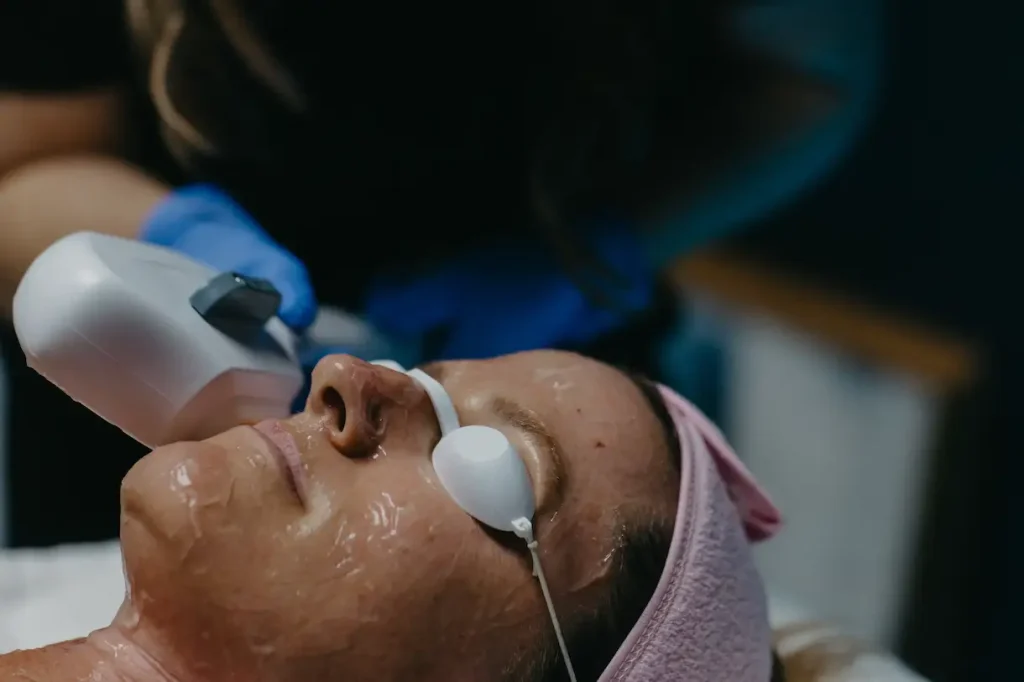
Your skin is cleansed, a cooling gel is often applied, and you will wear protective eyewear throughout.
Treatment
The handpiece is placed against your skin and pulses of light are delivered across the area. Most people describe the sensation as a brief snap, like a rubber band flicking the skin.
Cooling and protection
We cool the area, apply protective products, and go through your aftercare.
Most facial sessions take around twenty to thirty minutes.
Show More
Is IPL Right for Your Skin?
We want to be direct here, because this is where IPL most often goes wrong at clinics that are not careful.
Because IPL targets melanin, it is generally not appropriate for deeper skin tones. When there is melanin throughout the skin rather than concentrated in specific spots, the energy can affect surrounding skin, risking burns and pigmentation changes that may take months to resolve or become permanent. If IPL is not safe for your skin, we will say so and recommend alternatives that are.
There are other reasons we may postpone or decline. Recent sun exposure or tanning, including self-tanner, significantly increases risk. Pregnancy, active skin infections, cold sores in the treatment area, recent isotretinoin use, and photosensitizing medications all affect timing. Please tell us everything you are taking.
Why Restorativ Health & Beauty
IPL is powerful, and powerful devices produce excellent results or real damage depending entirely on assessment and settings. Restorativ Health & Beauty was founded by a registered nurse and is guided by licensed medical providers, including a physician assistant who leads our clinical care, so your treatment is properly assessed and performed in a medically directed setting.
We assess skin type honestly rather than treating everyone who books, and we set realistic expectations about the course you will need. Because we also offer microneedling and peels, we can recommend something else when IPL is not the right answer.
Show FAQ's
Frequently Asked Questions
No. A laser emits one precise wavelength, while IPL emits a broad spectrum of light. That range allows IPL to treat pigment and redness in the same session, though it is less targeted than a laser for certain specific concerns.
Most people find it very manageable. The sensation is usually described as a brief snap, like a rubber band against the skin, with a flash of heat. Cooling is used throughout.
Because that is how it works. The pigment has been broken up and is rising to the surface, so spots often look darker or speckled for several days before flaking away over one to two weeks. It is a sign the treatment is working, not a problem.
No. Recent sun exposure, tanning, or self-tanner significantly increases the risk of burns and pigmentation problems. We will postpone rather than treat tanned skin.
Generally not, because it targets melanin and cannot reliably distinguish a dark spot from naturally deeper skin. We assess your skin type honestly and will recommend safer alternatives if IPL is not appropriate.
Begin Your Wellness Journey
Relax, Restore & Reconnect at Restorativ Health & Beauty